Sun-Drop Flower

Assistive lighting that is also art.
Assistive Technology Lead Designer & Co-Fabricator Viral on Instagram 1M views · 100K likes
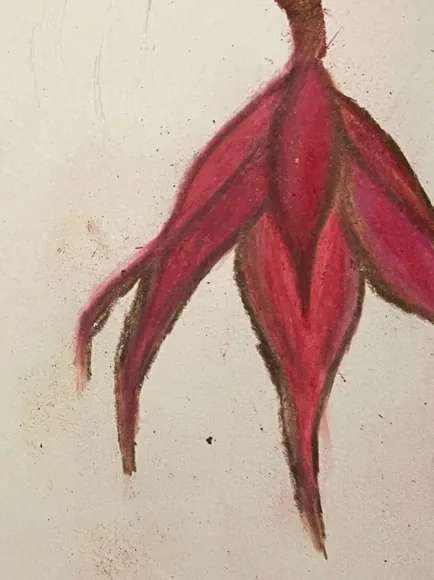
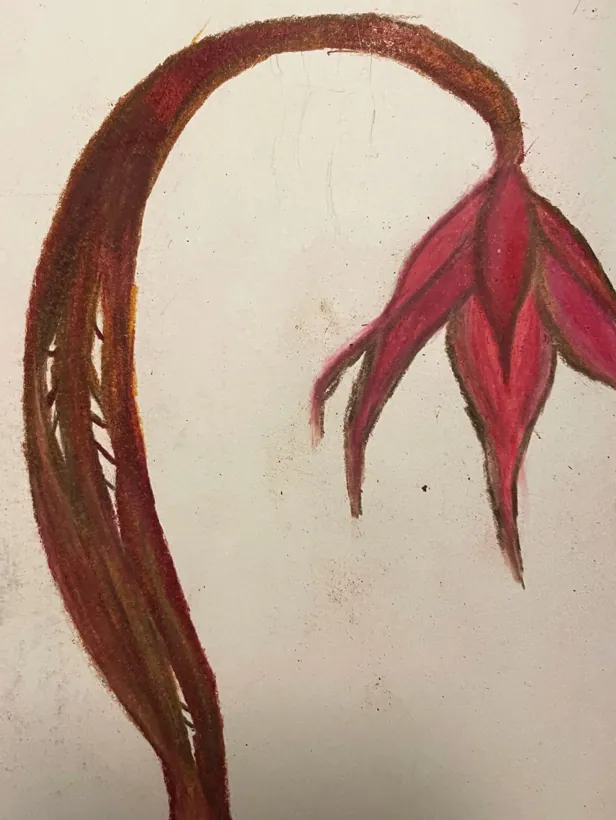
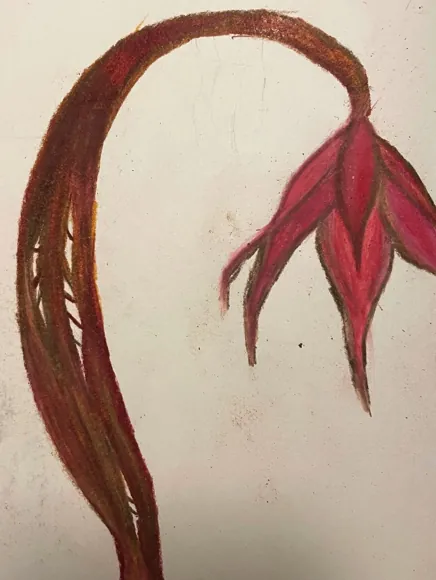
My painted sketch of the flower: red petals hanging from a long, curving stem.
Plum#552435
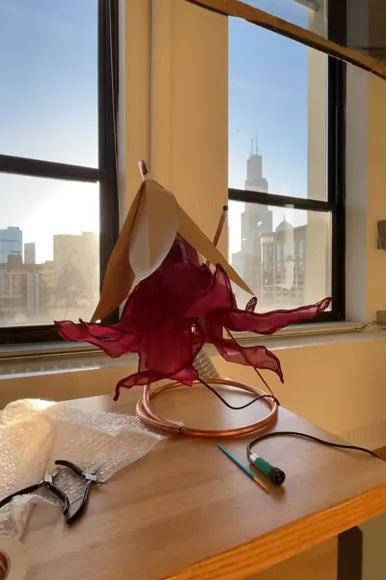
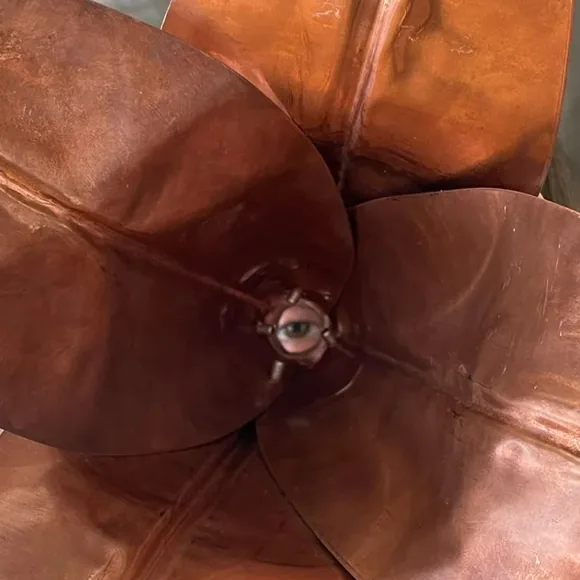
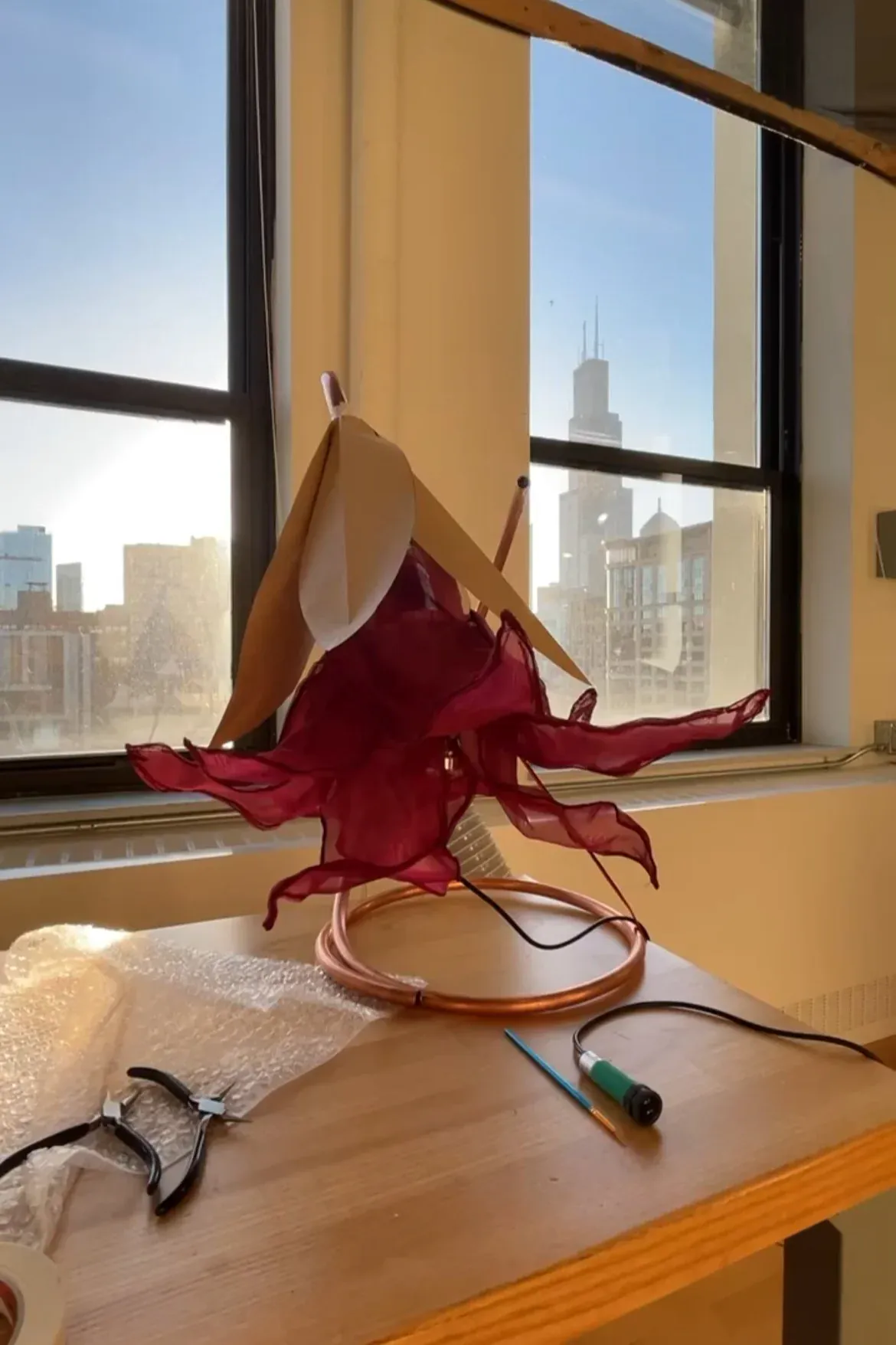
The Sun-Drop Flower on a wooden table by a window, with pliers and wire beside it. Close up of the final copper hood: hammered copper petals around a centre bolt.
Petal#D3263F
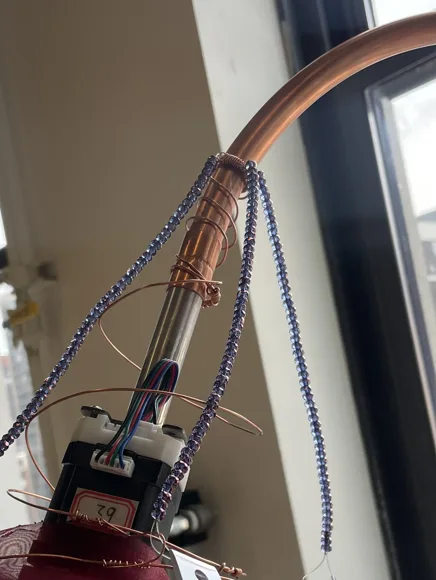
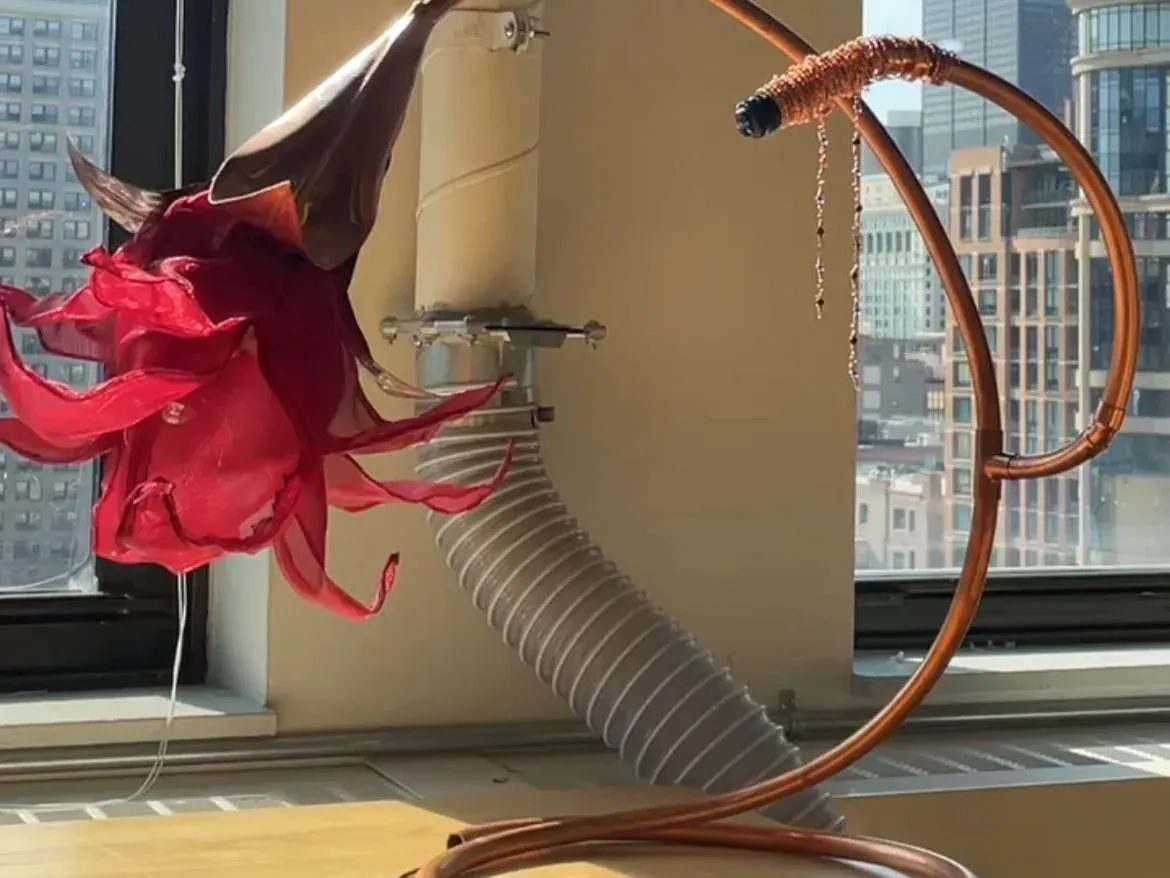
The copper stem with beaded wiring and the lamp's circuit board, during testing. Close up of the finished lamp: red fabric petals under the copper hood, the copper stem arcing toward a city window. The wire cage and electronics at the top of the copper stem, with Willis Tower behind.
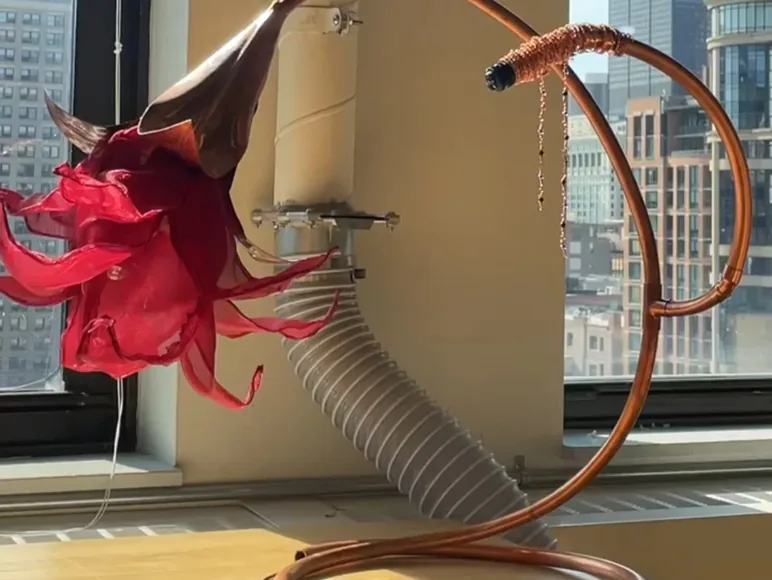
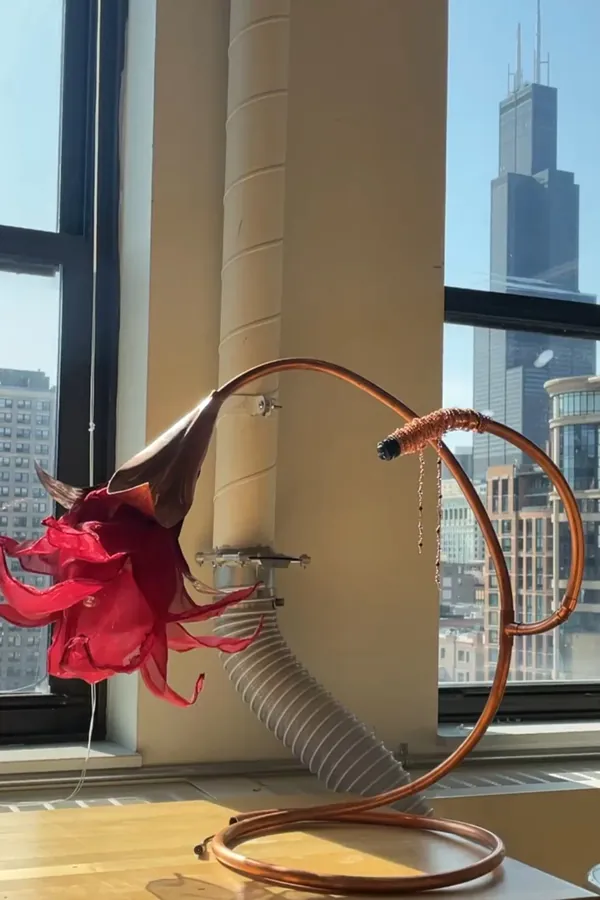
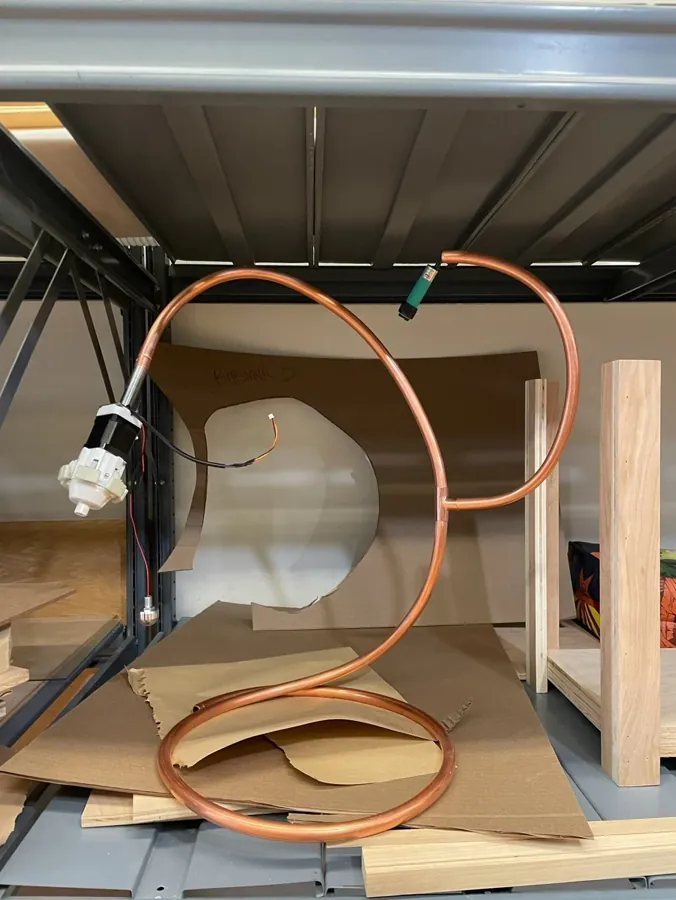
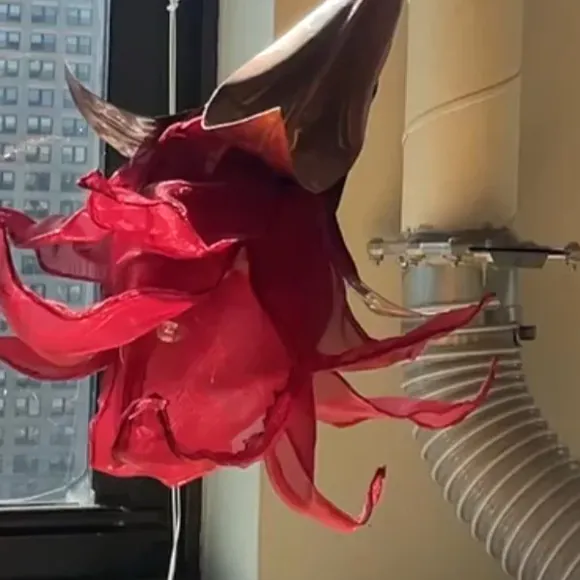
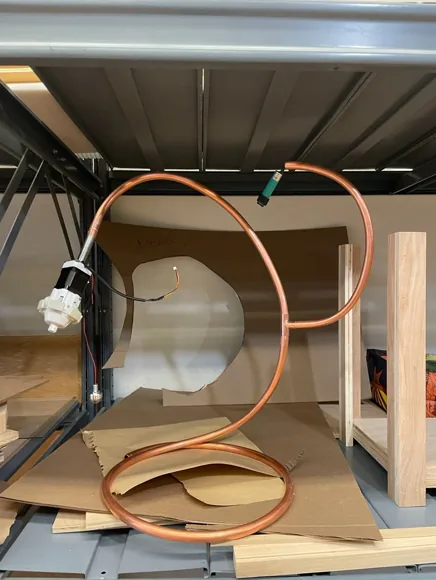
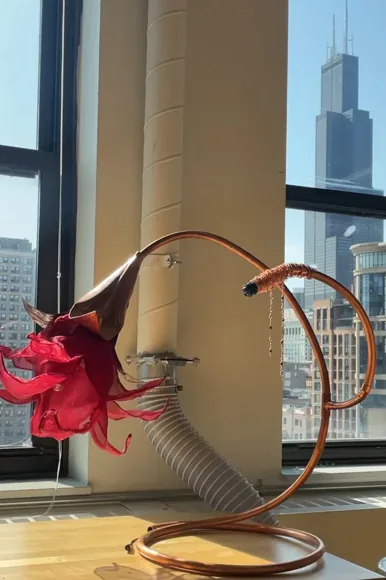
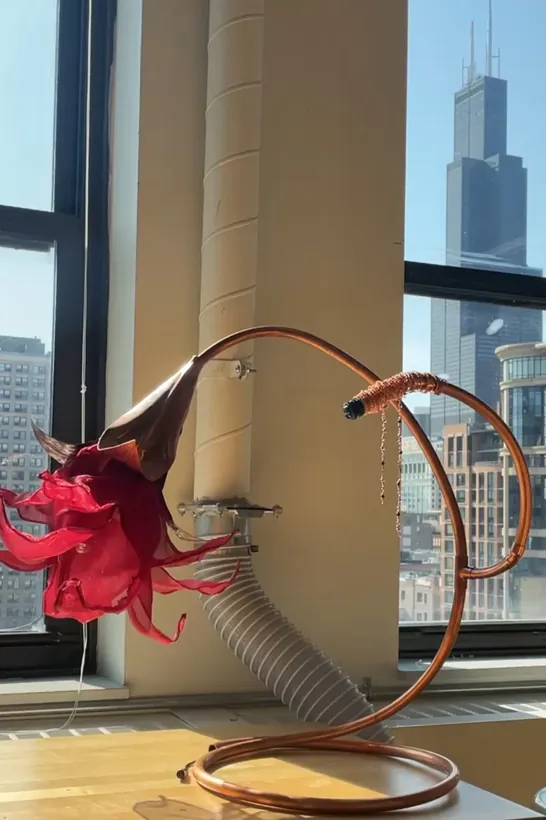
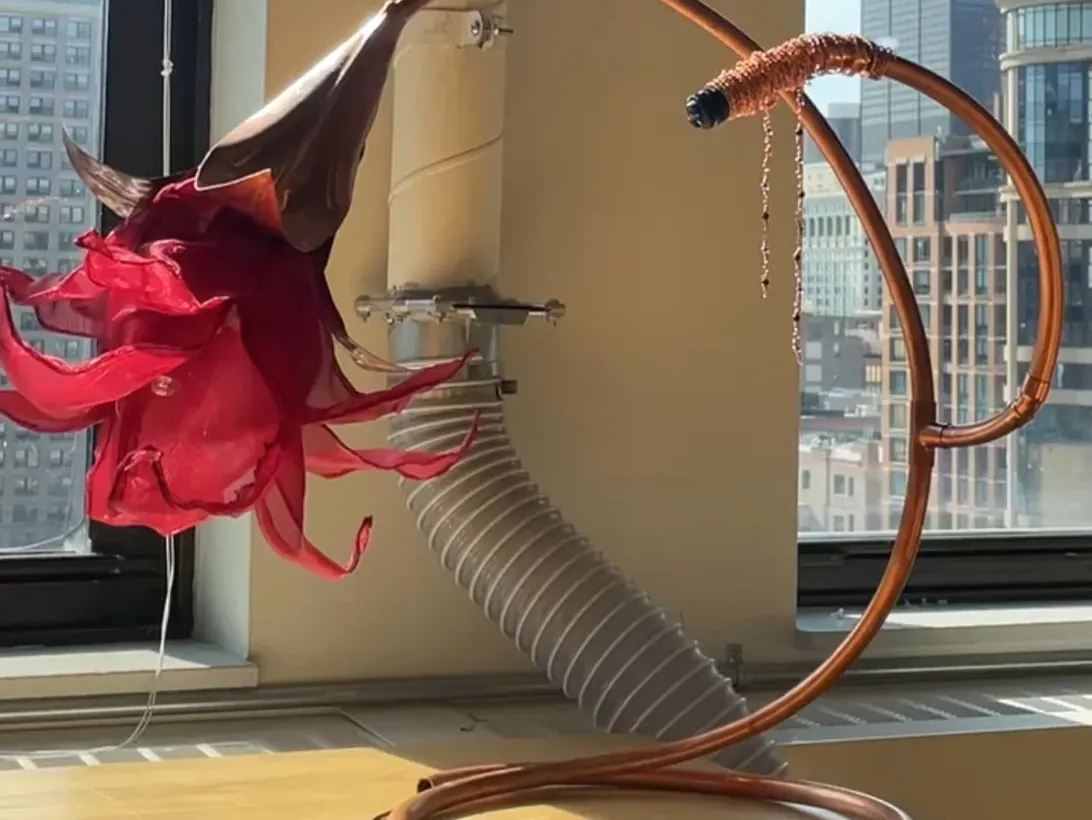
The finished Sun-Drop Flower: red fabric petals under a copper hood on a spiral copper stem, by a window looking out at Willis Tower. The copper tube skeleton of the lamp, curving up from a spiral base on a workbench.
Gold#E7CC9A
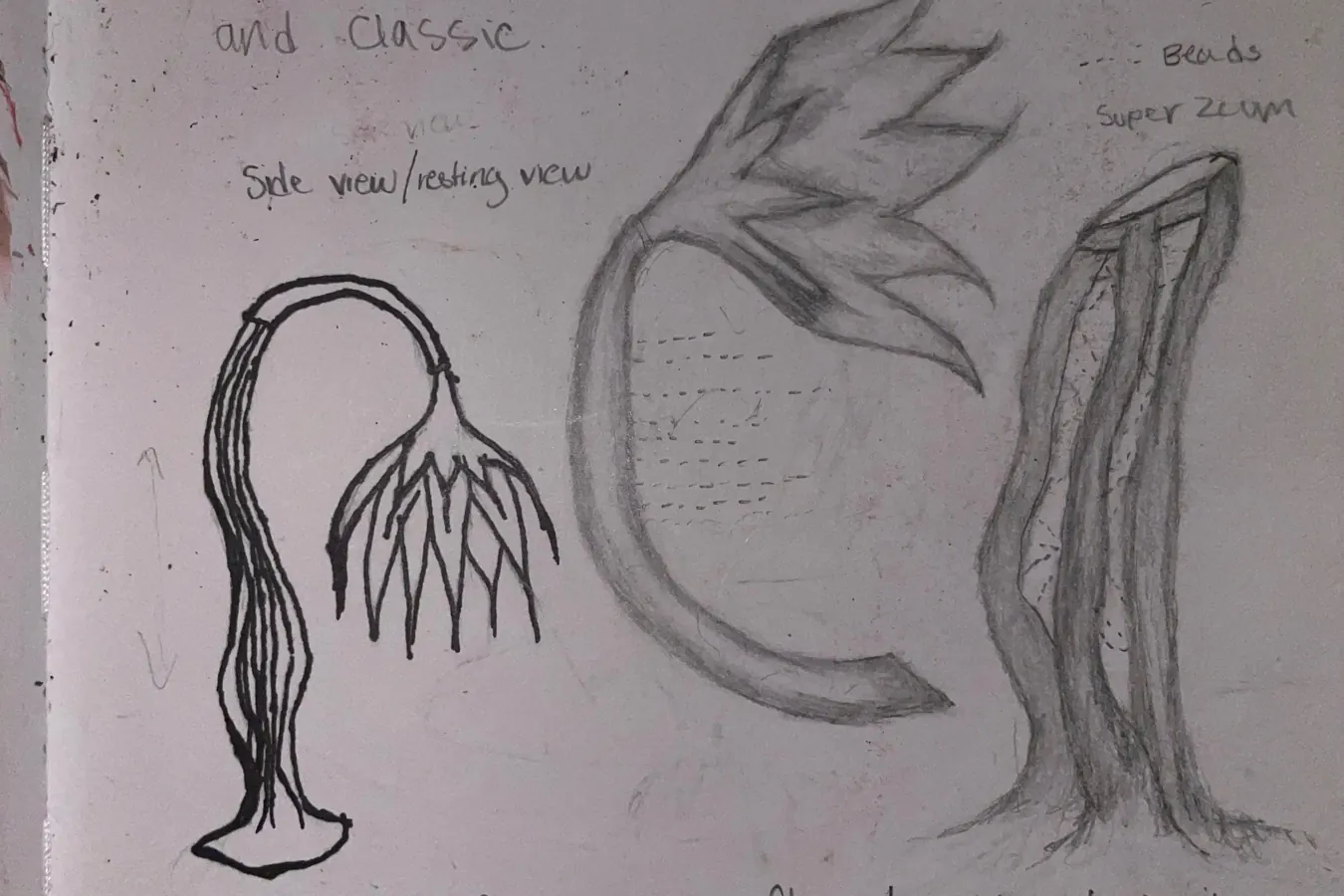
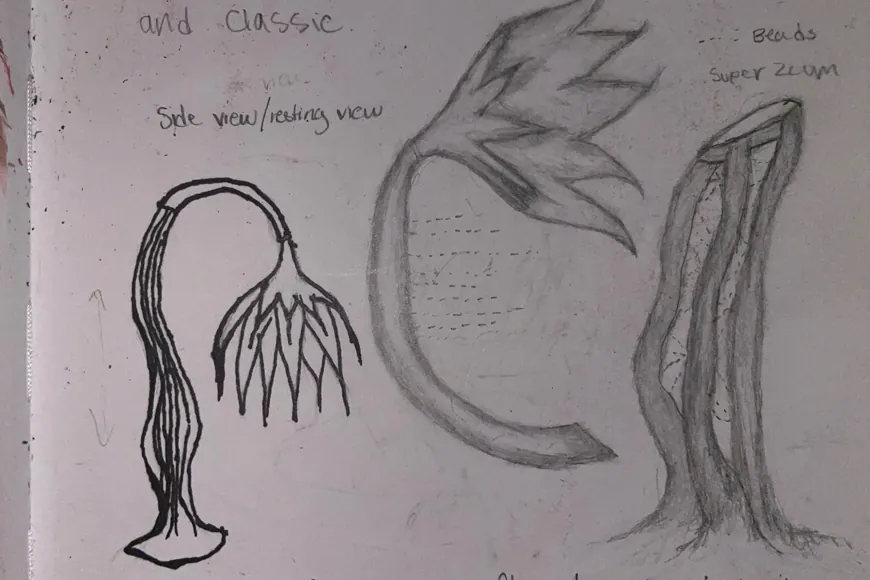
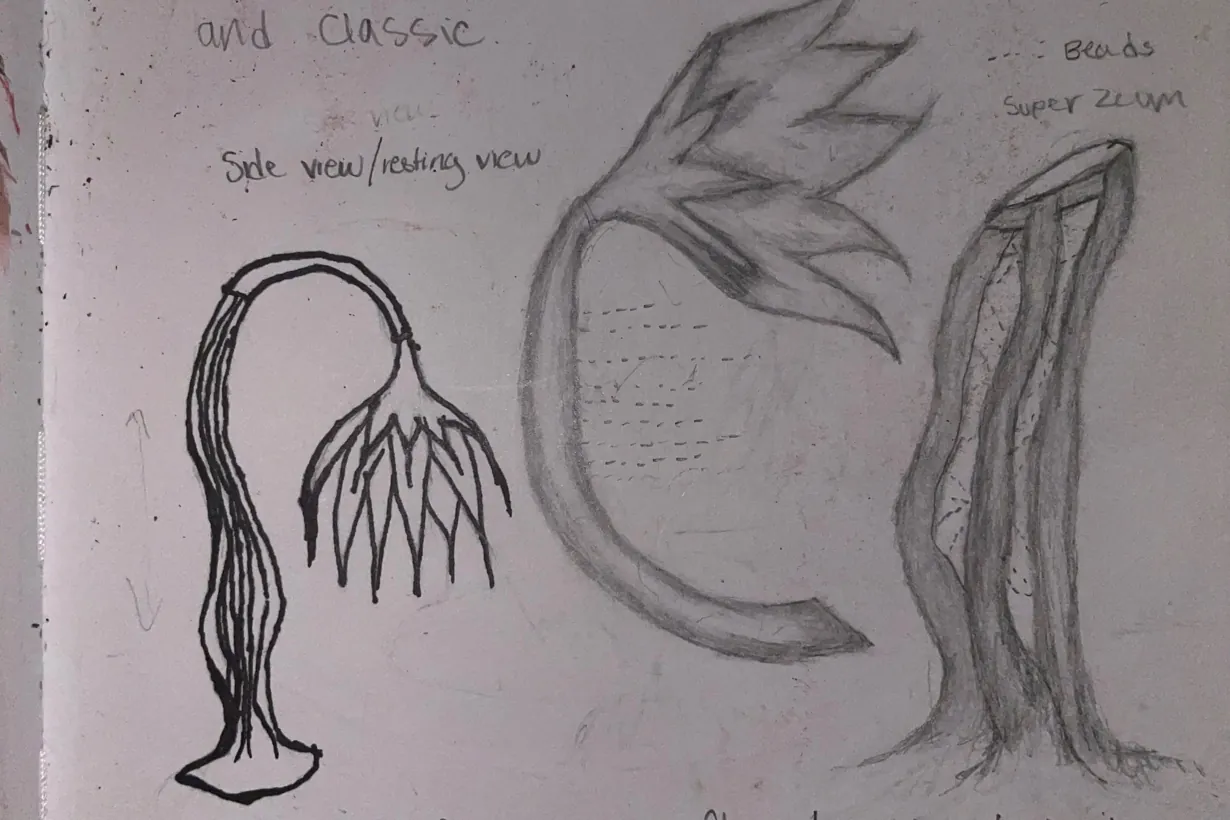
My pencil sketches of three lamp ideas, each a flower on a bending stem. Close up of the finished lamp: red fabric petals under the copper hood, the copper stem arcing toward a city window. The wire cage and electronics at the top of the copper stem, with Willis Tower behind.
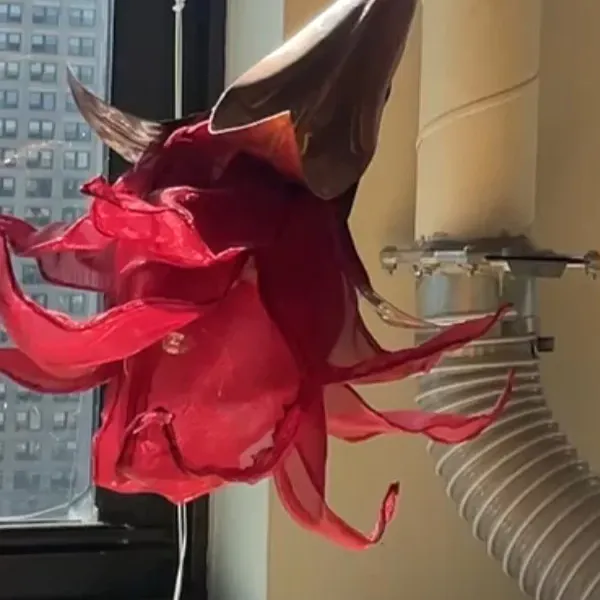
Close up of the red fabric petals under the copper hood.
Copper#B86A3E
Detail of my painted sketch: the red flower head at the end of the stem.
Cream#F5EDD2
My pencil sketches of three lamp ideas. The copper tube skeleton of the lamp, curving up from a spiral base on a workbench. The finished Sun-Drop Flower by a window looking out at Willis Tower.

The world of the Sun-Drop Flower: my sketches, the build, the finished lamp and its palette.
Meet the Sun-Drop Flower.

My mom has arthritis, and some days the pain in her hands makes turning on a lamp hard. So I built her a robotic lamp with a motion sensor. A small wave of the hand turns it on, no switch needed.

How might we make accessible lighting as beautiful as it is easy to use?

Problem

Easy to use, hard to love.

Good lighting helps people with mobility challenges stay safe and independent at home.

It should be easy to use, with features like motion sensors and voice control. It should also look good enough to make a room feel welcoming. Most assistive lighting only does the first part.

Old
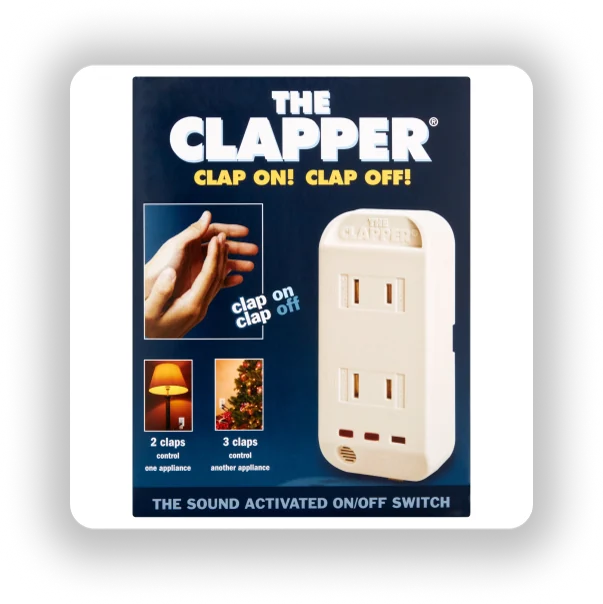
The Clapper, a sound-activated on and off switch, in its retail box.
Hands-free lights have been around for decades. They work, but they put function before looks.
New
The Sun-Drop Flower on a wooden table by a window, with pliers and wire beside it.
That gap between utility and design is what I set out to close: assistive tech that works and belongs in a beautiful home.
Research

It started with an interview.

I interviewed a senior client with mobility challenges about their needs, their tastes, and where everyday tasks and assistive tech let them down.

Meet Eleanor.

Eleanor Hayes is my persona. She's 68, a retired interior designer in a downtown apartment. She hosts small gatherings, loves decorating and puts style first in everything she owns. She's fine with technology but wants it simple. Arthritis makes twisting a lamp knob or pulling a light string hard.

What she wants.

A beautiful home that still works for her. Products that add comfort without giving up design, and tech that's easy to use and fits her style.

What gets in her way.

Most assistive devices are clunky. Practical lighting tends to look industrial or plain. Finding something both useful and beautiful is hard.

"It's important for me to find solutions that blend functionality with elegance."

Eleanor Hayes, my persona
Insight

Nobody made it beautiful.

Joseph Enterprises, the maker of the Clapper, Lutron and iHome all offer similar features. None of them offered a choice that's nice to look at.

That's where the Sun-Drop Flower stands apart. It puts artistic design and assistive features in the same object.

Process

Petals, copper and code.

I took my cues from nature: fabric petals on a copper stem. I followed the Double Diamond process from the first sketch to the finished lamp.

How I made it.

I sewed the petals on a sewing machine and 3D printed a housing for the electronics. Copper sheet and wire became the stem and the motor cover. I soldered the circuit and programmed the light and the movement on an Arduino, and kept my mood boards and notes in design software.

Who I made it with.

Julian Grubb helped me build it. Together we worked out how to hide the electronics and balance the weight. After a few rounds, the lamp matched what I'd pictured.

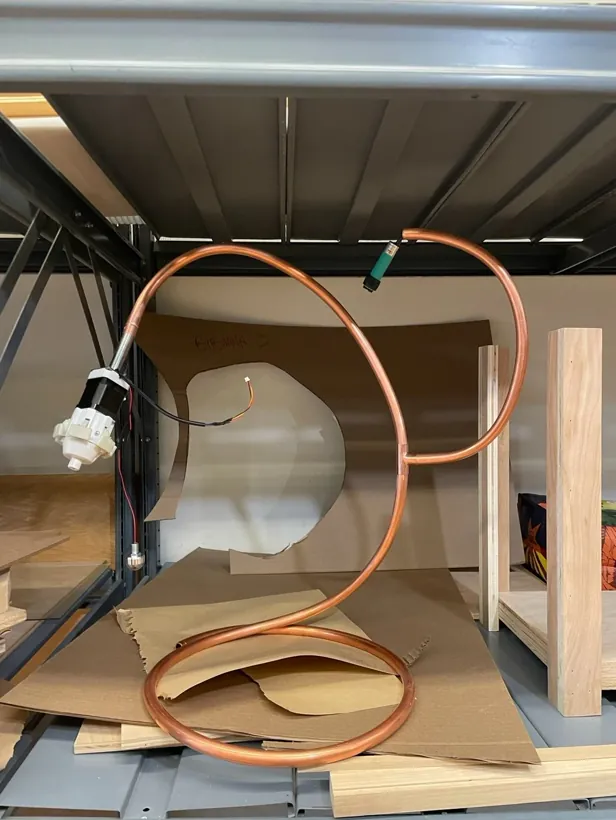
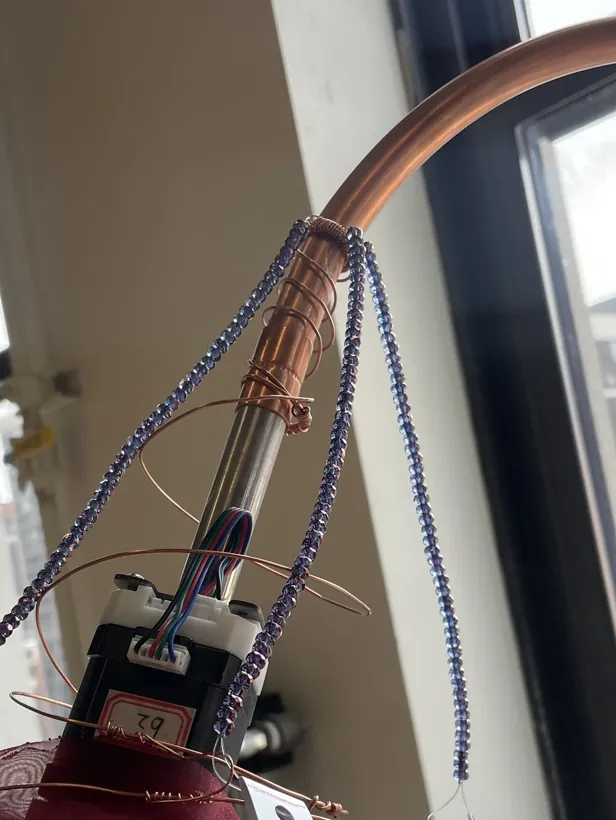
My painted sketch of the flower: red petals hanging from a long, curving stem. My pencil sketches of three lamp ideas, each a flower on a bending stem. The copper skeleton: copper tube curving up from a spiral base on a workbench. Testing the electronics: beaded wiring and the circuit board on the copper stem.
My sketches, the copper skeleton and testing the electronics. Drag or tap to look closer.
Challenge

Balancing the copper hood.

The hardest part was the weight of the copper hood. It had to sit steady and balanced without losing the lamp's elegant line.

It took several rounds. After testing different approaches, we found a way to support the hood that kept the lamp working and looking the way it should.

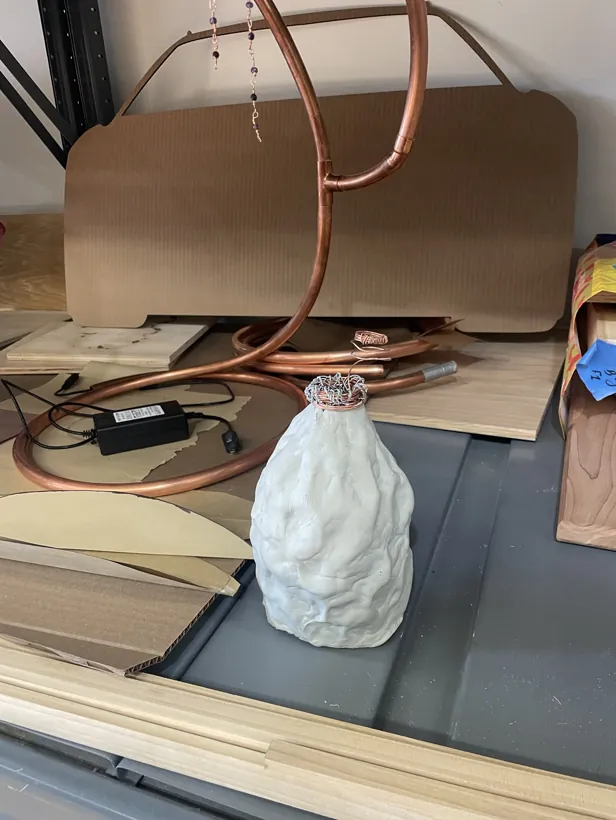
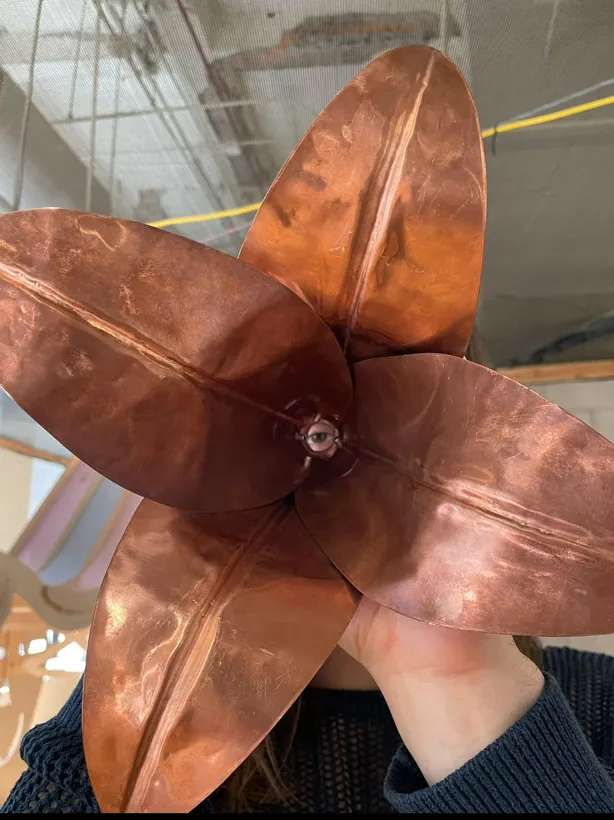
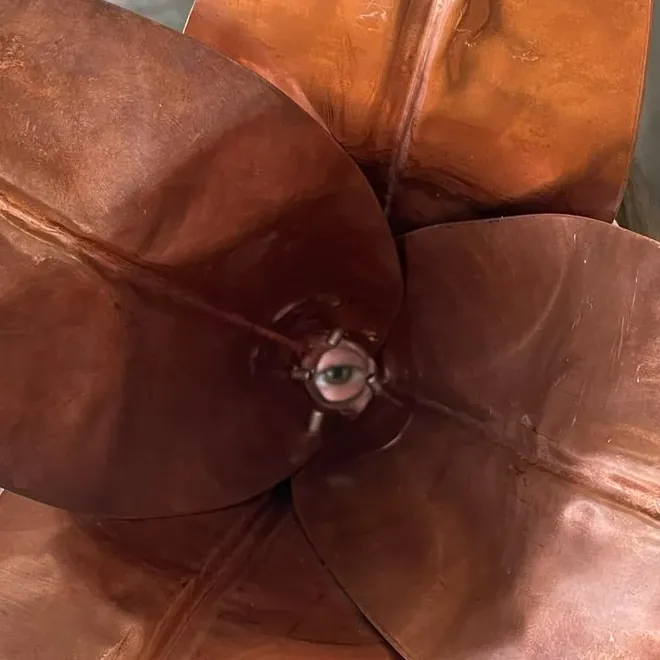
The copper stem on the workbench during testing, with a white form at its base. A wire cage around the lamp's electronics at the end of the copper stem, against the sky and Willis Tower. The final copper hood: four hammered copper petals, held up to the camera. Close up of the final copper hood: hammered copper petals around a centre bolt.
Testing, then the final copper hood design.
Solution

Art you can use.

The Sun-Drop Flower merges art and function. It's dynamic, accessible lighting for people with mobility challenges that makes a living space easier to use and lovelier to look at.

The finished Sun-Drop Flower: red fabric petals under a copper hood on a spiral copper stem, by a window looking out at Willis Tower. Close up of the finished lamp: red fabric petals under the copper hood, the copper stem arcing toward a city window. Close up of the red fabric petals under the copper hood.
The finished lamp.

Next Project

Project 808 →